For the first time, Berlin’s Friedrichshain-Kreuzberg district has fined a landlord for charging exploitative rent—190% above the legal limit set by the local rental index, or Mietspiegel, which applies in areas with particularly strained housing markets. The tenant now has the opportunity to sue for a refund of €22,264.08 in overpaid rent.
Berlin is set to become significantly greener over the next 15 years, with a plan to plant hundreds of thousands of new trees across the city. This ambitious initiative stems from a draft law jointly developed by the CDU and SPD coalition parties in collaboration with the citizens’ initiative BaumEntscheid.
Nettelbeckplatz in Berlin-Mitte has officially been renamed Martha-Ndumbe-Platz, honoring a Berlin-born woman of Cameroonian and German descent who was deported to Ravensbrück concentration camp in 1944 and died there in early 1945. The renaming replaces Joachim Nettelbeck, a former slave ship officer and colonial advocate.
Berlin’s population is growing faster than anticipated, with projections now suggesting the city could surpass four million residents by 2036. While Berlin has seen steady growth in recent decades, it still hasn’t reached its historical peak of around 4.4 million, recorded just before or during World War II. Interestingly, the city has the lowest birth rate in Germany, meaning this growth is driven almost entirely by immigration. By 2040, an estimated 109,000 new residents are expected to arrive, reshaping the city’s demographic landscape.
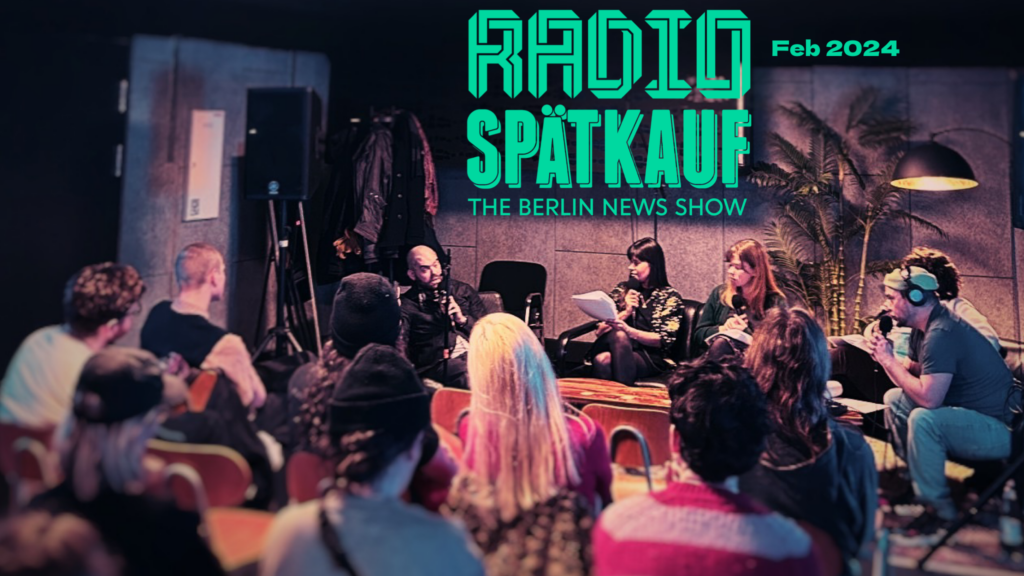
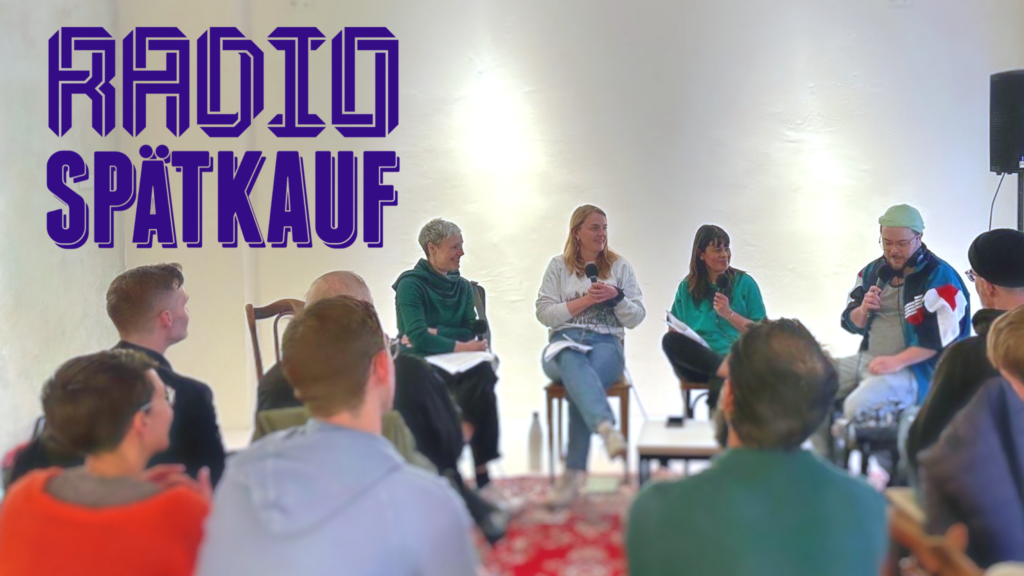
“Saving Culture” is Season 2 of Radio Spaetkauf‘s Collaboration with the EAB – Europäische Akademie Berlin. In Episode two: “Everything is Culture” we discuss club culture, sports, comics, and video games are part of our cultural world. We reflect on the challenges of preserving diverse cultural spaces, the importance of inclusivity, practical ways to get involved and how expanding our definition of culture also means expanding our understanding of how we support cultural creators, spaces and communities. Host Daniel Stern is joined by a fantastic panel exploring the support and protection culture in all its forms, ensuring it remains accessible and vibrant for everyone.
Notes: Recorded live at CCB Studios. Thank you to Manuel, Carolin, Lucas and the rest if the team at EAB. Edited and mastered by Kaleb Wentzel-Fisher Support – Trevor Silverstein Engineering: PodFest Berlin Co-Produced by Europäische Akademie Berlin’s Europe Behind The Headlines series, with kind support of the Federal Foreign Office and EU (CERV): Link
“Saving Culture” is Season 2of Radio Spaetkauf‘s Collaboration with the EAB – Europäische Akademie Berlin. In Episode one “Can We Support Subculture?” we look at the needs of independent artists, underground scenes, and freelance creatives. We examine the role of institutions, the state and individuals in ensuring that they survive and thrive and create without constraint. Host Daniel Stern is joined by a fantastic panel exploring the preservation of cultural diversity amidst funding cuts and other challenges.
Our conversation covers a wide number of topics. Bianca sheds light on the precarious financial situation of solo entrepreneurs in the cultural sector. Read her report on the cultural sector here: LINK. Erikah explains how and why Panke became a haven for experimental and fringe creativity. Pedro discusses the transformation of DIY by digital media and the role of guest curators in bridging the gap between mainstream institutions and subculture artists. Manuela explores the complexities of cultural visibility, particularly in the LGBTQ+ movement. She raises important questions about the balance between mainstream acceptance and maintaining the authenticity of subcultures.
Notes: Recorded live at CCB Studios. Thank you to Manuel, Carolin, Lucas and the rest if the team at EAB. Edited and mastered by Kaleb Wentzel-Fisher Engineering: PodFest Berlin Co-Produced by Europäische Akademie Berlin’s Europe Behind The Headlines series, with kind support of the Federal Foreign Office and EU (CERV): Link
The “Görli bleibt offen” campaign is intensifying as construction of the controversial fence around Görlitzer Park moves forward. The Berlin Senate has begun installing the fence, which will close the park nightly; between 11 p.m. and 6 a.m. in summer, and 10 p.m. to 6 a.m. in winter, as part of a broader €30 million “security package”. The police have pledged to “neutrally accompany” these protests as long as they remain non-violent. Meanwhile, local initiatives like “Görli zaunfrei” LINK are proposing alternative safety concepts that don’t involve fencing off public space.
Progress is being made to curb Berlin’s sky-high rents. Neukölln, which is fast becoming the city’s unlikely housing policy hero, has banned the temporary rental of furnished apartments in its Milieuschutzgebiete; neighborhoods protected from gentrification. The legal foundation for the ban comes from a 2023 court ruling that deemed such conversions unlawful in protected areas. Neukölln is now enforcing that decision, even ordering landlords to reverse co-living setups and restore original apartment layouts. The city-state’s Senate and other districts are watching closely, with some already exploring similar measures.
Berlin’s most explosive New Year’s tradition has fizzled—not with a bang, but with a budget cut. The iconic Silvester-Party at the Brandenburg Gate, a staple since reunification, has been cancelled for 2025. The event’s organizer, Berlin feiert Silvester GmbH, announced it won’t go forward without a confirmed subsidy from the city, typically between 500,000 and one million euros from public tourism agencies like Visit Berlin and Berlin Partner. The state of Brandenburg, like Berlin, is in the middle of a budget slashorama. Money is being cut from everything. But one thing that is staying free is access to Park Sanssoci, the beautiful collection of palaces in Potsdam sometimes called the Versaille of Germany. Dan shares his thoughts on this choice.
We have an update on the case of the three EU citizens and one American threatened with deportation from Germany. The four activists, Shane O’Brien and Roberta Murray (Ireland), Kasia Wlaszczyk (Poland), and Cooper Longbottom (USA), were initially targeted for deportation following their participation in a pro-Palestinian sit-in protest at Berlin’s Free University in late 2024. The Berlin Administrative Court ruled in favor of the activists, halting their deportations. The court found the legal grounds for expulsion insufficient and emphasized the importance of protecting political expression.
Valentina Zalevska, a film curator, distributor, and researcher based in Berlin joined us to talk about Founding the Ukrainian Film Festival Berlin and the state of the Ukrainian film industry during a time of invasion. We also chat with her about the amazing film U Are The Universe which screened at the Lakeside Film Festival and will be on screen in Berlin in September. The 2025 Ukrainian Film Festival Berlin runs October 22nd to the 26th. https://www.uffberlin.de/
Izzy isn’t just a podcaster, she’s also a tour guide. She tells us about her upcoming tour on July 20th, tickets can be found at this link: The Berliner on Eventbrite
Izzy’s not just a podcaster/tour guide, by day she is also an environmental policy wonk and concludes the episode with updates on how Berlin is doing in meeting its ambitious climate targets. The city aims to become climate-neutral by 2045, with key milestones along the way: a 70% reduction in CO₂ emissions by 2030 and at least 90% by 2040, compared to 1990 levels. But as of today, Berlin is not yet on track to meet its 2030 target. Meanwhile Mayor Kai Wegner (CDU) has halted plans to build wind turbines in the Grunewald forest, and argued that “Berlin should be a solar engine, not a wind site,” and has called on the federal government to reconsider mandates requiring city-states to allocate land for wind energy. Izzy points out that a grid is most resilient when both solar and wind are deployed, and also that wind delivers a higher energy capacity figure meaning that it is a better resource for industrial off-takers. Listeners will recall that Berlin managed to buy back its district heating system from Vattenfall last year. Unfortunately, due to financial difficulties and a lack of political pressure, there is little being done to push for decarbonisation efforts of the district heating. Dan chimes in with his own inimitably uniformed solutions as well before we end the show with plugs and a fond farewell to our lovely weekend of outdoor cinema, lake swimming and camaraderie.
Berlin is losing its publicly-funded Nextbike system. What does it say about the city’s deflating civic status? Also we meet the artistic director of the Doxumentale film festival to hear why they’ve added an X to their name. And the founder of Give Something Back to Berlin will tell us about how beauty parlours are places of feminist empowerment.
Nextbike has lost its €1.5M annual public funding to run a discounted shared bicycle system across Berlin. The CDU-led city-state government says it is too broke to fund the scheme, which ran since 2017, and reached 4 million journeys last year. Joel explains what’s behind its demise.
Days before the start of Berlin’s Dokumentale documentary and non-fiction festival, the organizers received a legal threat over their name. Instead of fighting, they’ve changed their name to DoXumentale. We meet the festival’s artistic director Anna Ramskloger-Witt, who explains why the new name is better. She tells us about program, including a nature film about gay animals, a profile of a Berlin undertaker and more. DoXumentale runs until June 28. Find a screening or watch online at https://www.dokumentale.de/
What goes on behind the doors of beauty salons? NGO founder Annamaria Olsson decided to take a microphone to meet women in these safe spaces, and found a world of womens’ empowerment. Beauty salons give women jobs and help them overcome domestic violence. Annamaria has travelled to Morocco, Georgia, Bosnia and Kosovo to record audio for her project. The result is “Stories from the Beauty Parlor”. Listen now here: https://www.beautyparlorstories.org/
Radio Spaetkauf co-founder Joel Dullroy is briefly back in Berlin, after one of his trips around the world filming mini-documentaries. If you want to see some of his videos, go to: http://www.joeldullroy.com